
CDL Training With Job Guarantee: What It Really Means
If you're thinking about a new career, CDL training with a job guarantee sounds like the safest way in. We understand that. A big life change feels easier when someone promises the job at the end.
Here's the honest part: the phrase means different things at different schools. Some guarantees are solid, some are narrow, and some are just a slogan. Our goal in this guide is to help you tell them apart, so you can choose with confidence.
What a Job Guarantee Means in CDL Training
A job guarantee is a written promise with conditions, not a blanket offer of employment. The phrase has no single industry or federal definition, so each program's written terms decide what it covers.
That's why CDL job guarantee schools can sound alike in their ads and still offer very different things. One may promise a refund. Another may promise a job offer from a certain employer. A third may promise only to help you look.
The federal rules don't settle this either. FMCSA's Entry-Level Driver Training rule, in effect since February 2022, sets minimum training content and requires training providers to be listed on the Training Provider Registry. It does not define what a job guarantee must include, so each school's written terms decide that.
Checking a claim is a smart step, not a sign you're being difficult. If you're new to trucking, you don't need to know the industry to do it. You only need to ask to see the promise on paper.
And you don't need any driving background to get started with us. No prior driving experience is required, and classes can begin as soon as your application is approved.
Common Forms of Truck Driving Job Guarantee Programs
Most truck driving job guarantee programs fall into three groups: refund-based promises, employer-backed commitments, and placement-only help. The difference is who is bound to do what, and what happens if the job doesn't come.
Placement-only help is the loosest form. The school agrees to assist with your search, and nothing more is promised. That can still be valuable, as we'll explain below, but it isn't a guarantee of any kind, and a school that offers it shouldn't describe it as one.
Refund-Based Guarantees
A refund-based guarantee puts the risk on the school. A typical version says that if you don't land a driving job within a set window after you finish, the school returns some or all of your tuition.
What binds the school is the refund, and only the refund. It doesn't bind anyone to hire you. The school pays only if you meet every condition and the clock runs out, which is why the details matter more than the headline.
Look for the length of the window, when it starts, and whether the refund comes as cash or as credit toward more training. Credit toward more classes is not the same as getting your money back.
Employer-Backed Commitments
In an employer-backed commitment, a trucking company agrees in writing to hire or interview graduates who meet its standards. This is the form closest to a real job offer, because the party doing the hiring is the one making the promise.
It usually comes with strings. The employer may set its own rules on your record, your endorsements, and the routes you'll drive. You may also owe a work commitment in return, which is the same trade-off you'll find in employer-paid, company-sponsored training.
If an employer is behind the promise, ask for the employer's name and the commitment in writing. A school saying "our partners will hire you" is not the same as a carrier saying it.
Is a CDL Job Guarantee Real? It Depends on the Fine Print
Yes, a guarantee can be real and still be narrow. Most of the work of judging one happens in the agreement, not the advertisement.
Consumer-protection law generally prohibits misleading job and earnings claims. That does not mean every ad is checked, so a signed agreement is a stronger guide than a headline. Whatever you read online or hear on the phone, the document you sign defines what is promised.
Eligibility Rules Graduates Must Meet
Most guarantees only apply after you clear a list of conditions. Read for these:
Finishing the full training program, often with attendance requirements.
Passing the skills test within a set number of attempts.
A driving record that meets the carrier's or school's standard.
Drug screening and background checks.
Applying to a minimum number of employers, or responding to every interview offer.
None of these is unreasonable on its own, because employers screen drivers carefully. The trouble comes when a condition is hidden or vague, or when you can fail it through no real fault of your own.
Take the test-attempt limit. If the agreement allows one attempt and you need two, the guarantee may be gone before your job search even begins.
Route, Region, and Refund Terms
Many guarantees also tie you to a type of route or a region. You might be asked to accept any full-time driving job within a certain distance of the school, or a job on a specific kind of freight. Turn down one that fits the terms, and you may lose your claim.
Then come the refund mechanics, and these matter as much as the promise itself. Ask whether the refund is cash or credit, whether it's prorated, what the deadline is for filing a claim, and what deductions apply. A refund that shrinks with fees, or that you must request within a short window you didn't know about, is worth much less than it sounds.
Get every one of those answers in writing before you pay a deposit. If a school won't put its terms on paper, that tells you what you need to know.
What Real Placement Support Looks Like
Real placement support is concrete, and you can check it. It's also honest about who controls what: the school controls how well you're prepared, while employers control who they hire.
That's the line no school can cross. We can get you ready, make introductions where we can, and stay in your corner. We can't make a company's hiring decision for it, and we won't pretend otherwise.
Practical Help You Can Check
Good support leaves a paper trail. Here's what to look for at any school:
Help building a resume and filling out applications.
Mock interviews, so your first real one isn't your first.
Introductions to carriers that hire new drivers.
Written records of what the school did for each graduate.
If a school says it helps with jobs but can't show you what that help consists of, treat it as a slogan. You're entitled to ask for specifics.
Our approach to this is what we call Classroom to Career Support. We pair classroom instruction with hands-on preparation for life after graduation, and our approach centers on personal support. For the details of the process, see how our post-graduation placement support works. We don't repeat all of it here, and we don't present it as a guarantee of a job.
Support That Continues After Graduation
Landing a first driving job is rarely a single moment. Offers can take time, and the first weeks on the road bring questions you didn't know to ask in the classroom.
So look for a school that checks in after you graduate instead of closing your file the day you pass your test. Life After Graduation is part of how we think about training, because getting you licensed is only half of the goal.
Ask any school how long its support lasts, who you'd contact, and whether you'd have a real person to talk to. Then ask to see that in writing too.
CDL School Hiring Partners: Access Is Not a Promise
A hiring partner is an employer that works with a school. In practice, that usually means interview access or consideration for graduates, not a job offer. So the phrase "CDL school hiring partners" tells you very little about outcomes on its own.
Access still has value, especially when you're new and don't have contacts in the industry. It just isn't the same as a commitment.
Run three checks on any partner claim:
Ask for a named partner list. "Top carriers nationwide" isn't a list. Real partners have names you can look up.
Ask how recently each partner hired from the program. A partnership that hasn't produced a hire in years is a logo, not a pipeline.
Ask whether any partner has put a commitment in writing. If one has, ask to see it.
We don't have verified placement rates to share in this guide, and you should be wary of any school that quotes big percentages without showing how it counts them. A school that's confident in its partners will answer these three questions plainly.
Setting Expectations for a Guaranteed Job After CDL Training
Passing your tests is a milestone, not a job offer. You'll have earned a license that many employers want, and that's something to be proud of. It still isn't the same as having a start date.
Even a strong guarantee for a job after CDL training can't promise a specific wage or a specific route. Employers set pay and assignments, and both vary from one carrier to the next. If a promise sounds too exact, read its conditions twice.
What a First Job Often Involves
First jobs are often a stepping stone. Many new drivers start on set routes with irregular schedules, and some spend several nights a week away from home. That's normal, and it doesn't mean something went wrong.
Pay varies by route type, region, and experience. For context, here is what first-year truck drivers typically earn, and the driving jobs a CDL can open up may help you picture where you'd like to end up.
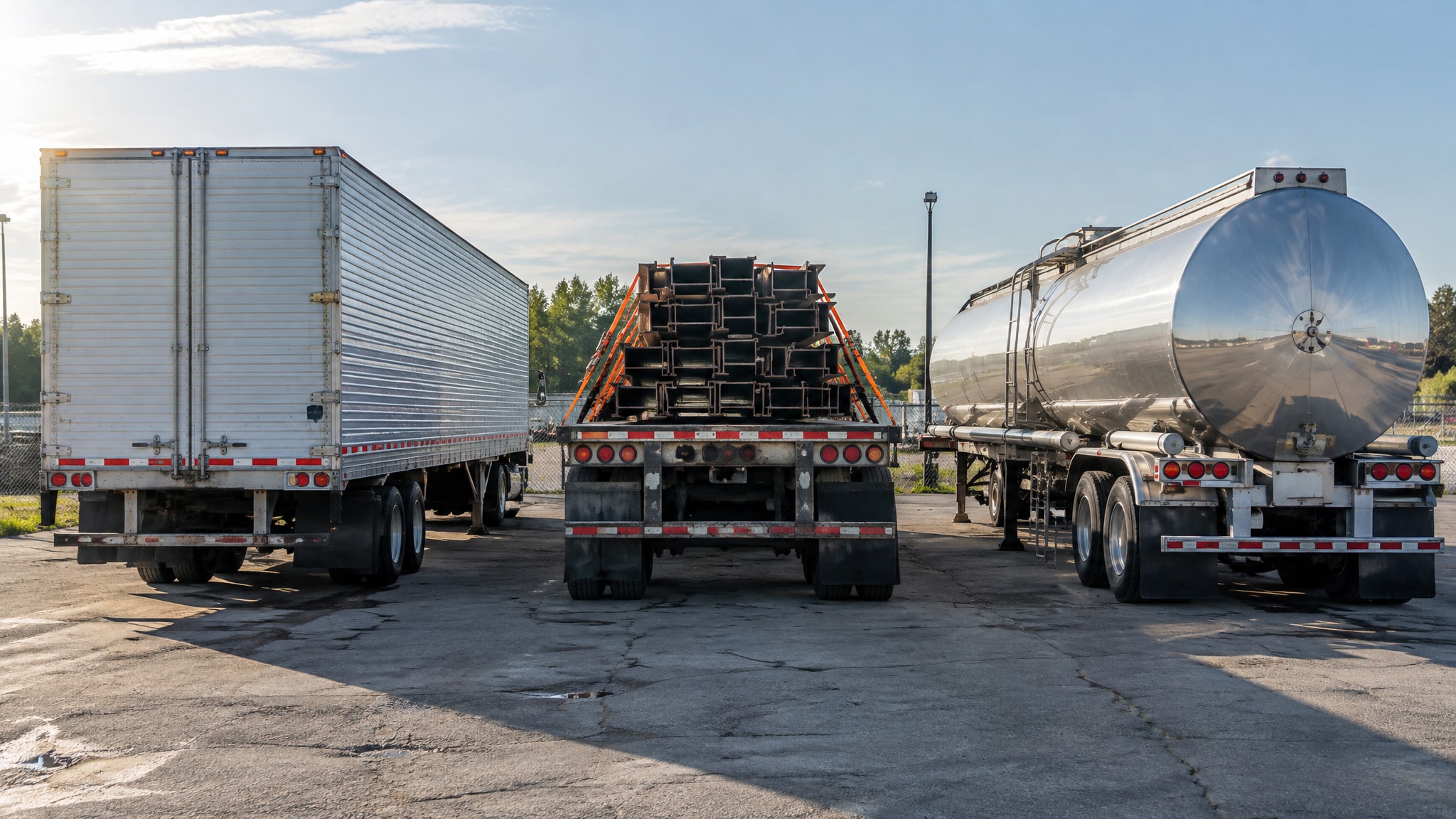
If a guarantee names a route type, it's worth knowing what you'd be signing up for. Tanker, flatbed, and dry van routes compared explains how daily work differs, so you can weigh a first assignment before you accept it.
You don't need to love your first job. You need it to get you the experience that opens the next one.
How to Evaluate a School's Job Promise Before You Enroll
You don't need insider knowledge to do this well. A handful of questions will tell you most of what you need. Bring them to every school you consider, ours included:
What exactly does the promise cover: a refund, a job offer, or help with your search?
What do I have to do to qualify, including test attempts, record checks, and route or region terms?
Is it a school refund or an employer commitment, and who signs it?
How does the school document placement, and can I see an example?
Then run two outside checks. First, look up the school on FMCSA's Training Provider Registry, since providers of entry-level driver training must be listed there. Second, see whether the program holds a third-party certification such as the Professional Truck Driver Institute's (PTDI).
PTDI certification speaks to training standards, not to whether a graduate is hired. It's a useful check, but it is not a job guarantee.
For a broader checklist, here are the questions to ask before choosing a CDL school.
If you'd like to talk it through, you can book a free consultation before you enroll. There's no pressure. Use the time to ask for the written terms of any job promise you've been shown, and to hear what our own placement support covers.
Frequently asked questions
Can a CDL school legally guarantee me a job?
A school can make a written promise, but it can't force an employer to hire you. That's why most guarantees are really refunds, employer commitments, or conditional offers. Read the signed agreement, because it defines exactly what the school is bound to do.
What happens if I don't meet a guarantee's conditions?
The guarantee usually doesn't apply. Common conditions include finishing training, passing the skills test within a set number of attempts, and clearing record and drug checks. Ask which conditions are in the agreement before you pay anything.
Is a refund-based guarantee better than placement help?
Not automatically. A refund can protect your tuition, but timing limits, deductions, or credit-only terms can shrink its value. Placement help carries no promise, yet strong, documented support can matter more day to day than a narrow refund.
Does PTDI certification mean a school guarantees jobs?
No. PTDI certification is a third-party check on training standards. It tells you something about the quality of instruction, not whether graduates are hired.
Do I need trucking experience to start CDL training with you?
No. No prior driving experience is required, and classes can begin as soon as your application is approved. Our team supports you from enrollment through preparing for life after graduation.


Comments